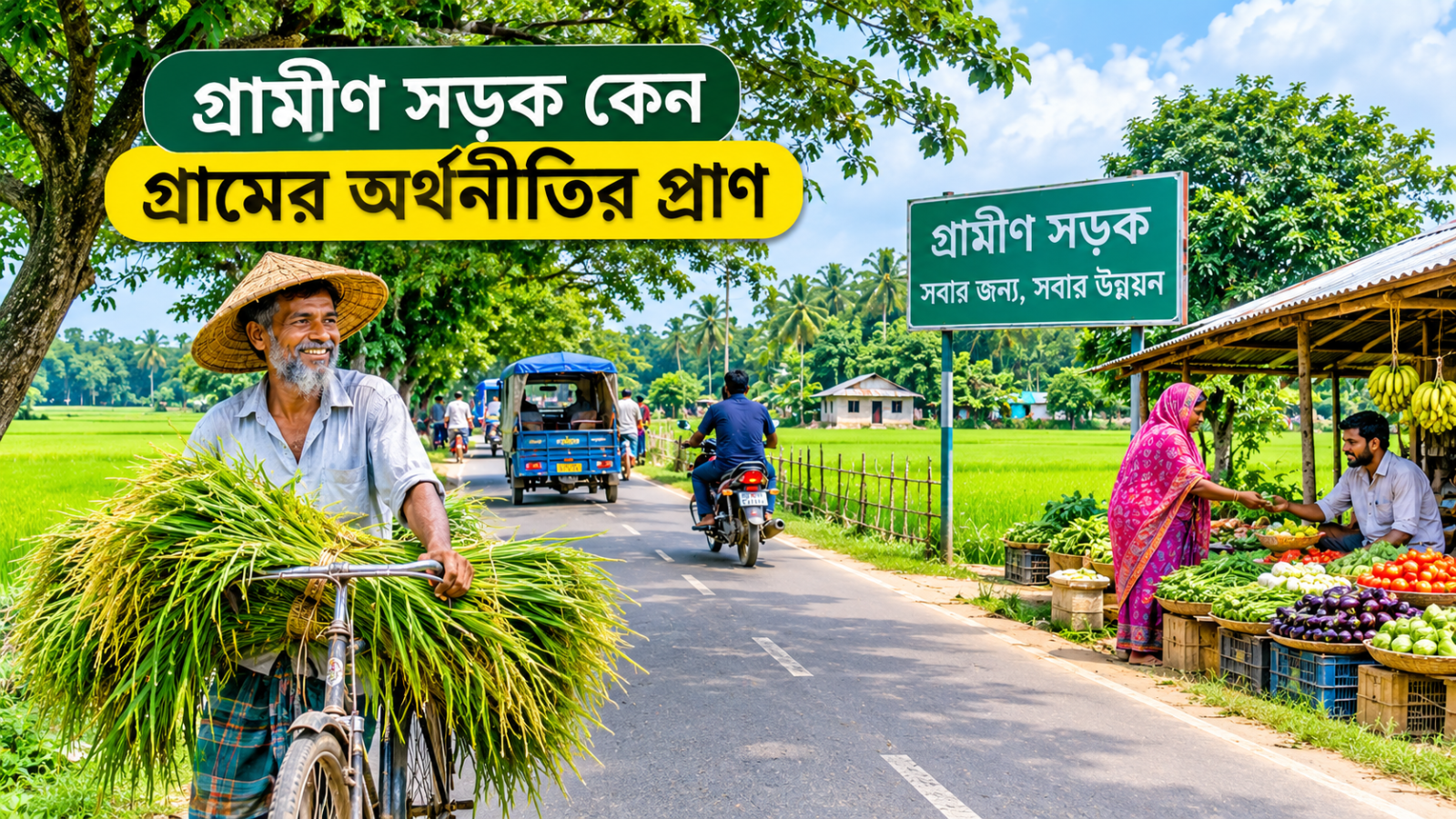
The difference between a village cut off by monsoon mud and one with an all-weather road is striking. Economists call rural roads the veins of the village economy—and with so many people living in villages, keeping them open matters for national progress.
Fair prices for farmers
Good roads let farmers take produce directly to markets, cutting transport cost, spoilage and dependence on middlemen.
School attendance
Easier travel raises attendance, especially for girls, and reduces absences during the rains.
Faster healthcare
Getting pregnant women, accident victims and the seriously ill to upazila or district hospitals quickly can save lives.
New jobs
Shops, workshops and transport services spring up along roads, and couriers and online businesses reach the village.
Making roads last
- Quality materials and proper design.
- Enough culverts and drains.
- Limits on overloaded vehicles.
- Regular maintenance and community oversight.
Cutting soil from road edges, dumping waste in drains or encroaching on roads shortens their life. Village roads belong to villagers—caring for them is everyone’s job.