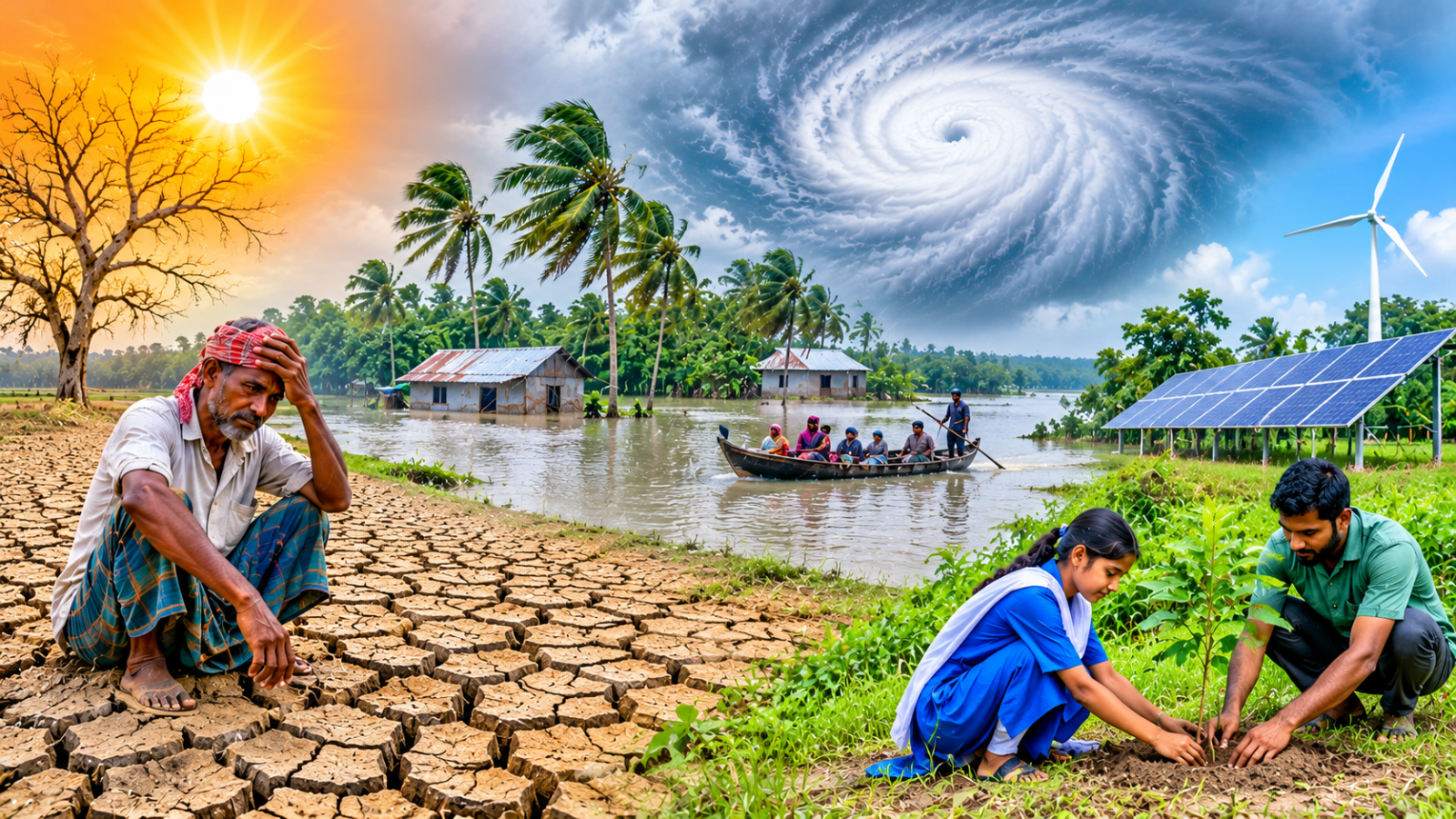
Climate change is a present reality. As a low-lying, densely populated delta with an agriculture-based economy, Bangladesh is among the most exposed countries, despite contributing very little to global emissions.
Main risks
- Sea-level rise threatening coastal land and settlements.
- Salinity in soil and water, hurting crops and drinking water.
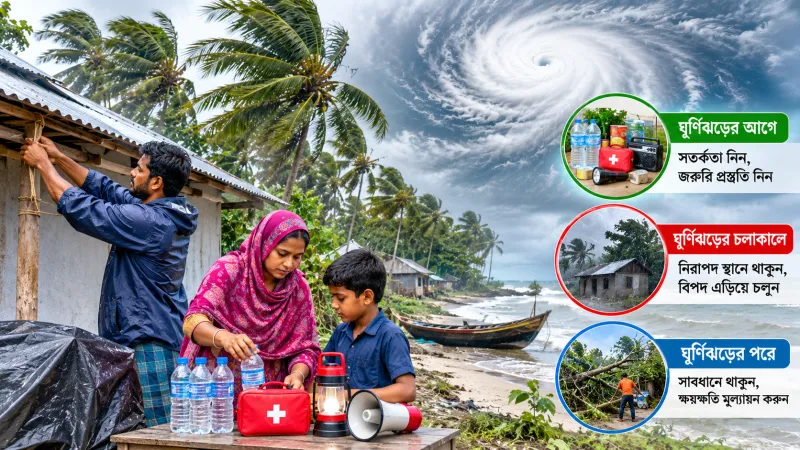
- Extreme weather: more intense and less predictable cyclones, floods, heavy rain, drought and heatwaves.
- Displacement pushing people towards cities.
- Health risks from heat and water-borne disease.
Adaptation experience
Salt- and flood-tolerant rice varieties, floating vegetable beds, raised homesteads, multipurpose cyclone shelters, coastal green belts, rainwater harvesting and solar power help communities cope—solutions blending local knowledge and technology that other countries can learn from.
Why cooperation matters
Rivers and storms ignore borders. Shared river management, early-warning exchange, disaster assistance and joint research can strengthen South Asia. Vulnerable countries also seek adaptation finance, technology transfer and support for loss and damage at global climate talks.
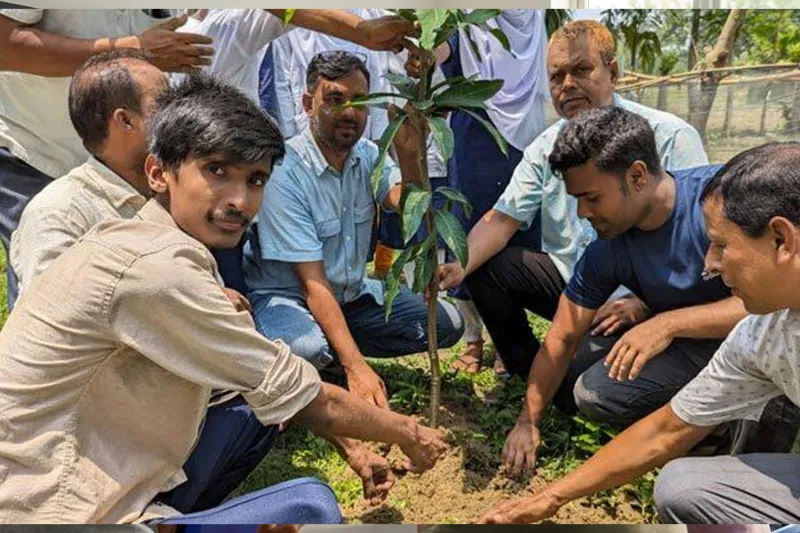
Individuals can save energy, plant trees, protect wetlands, cut plastic use and spread disaster awareness. A global problem needs collective solutions.