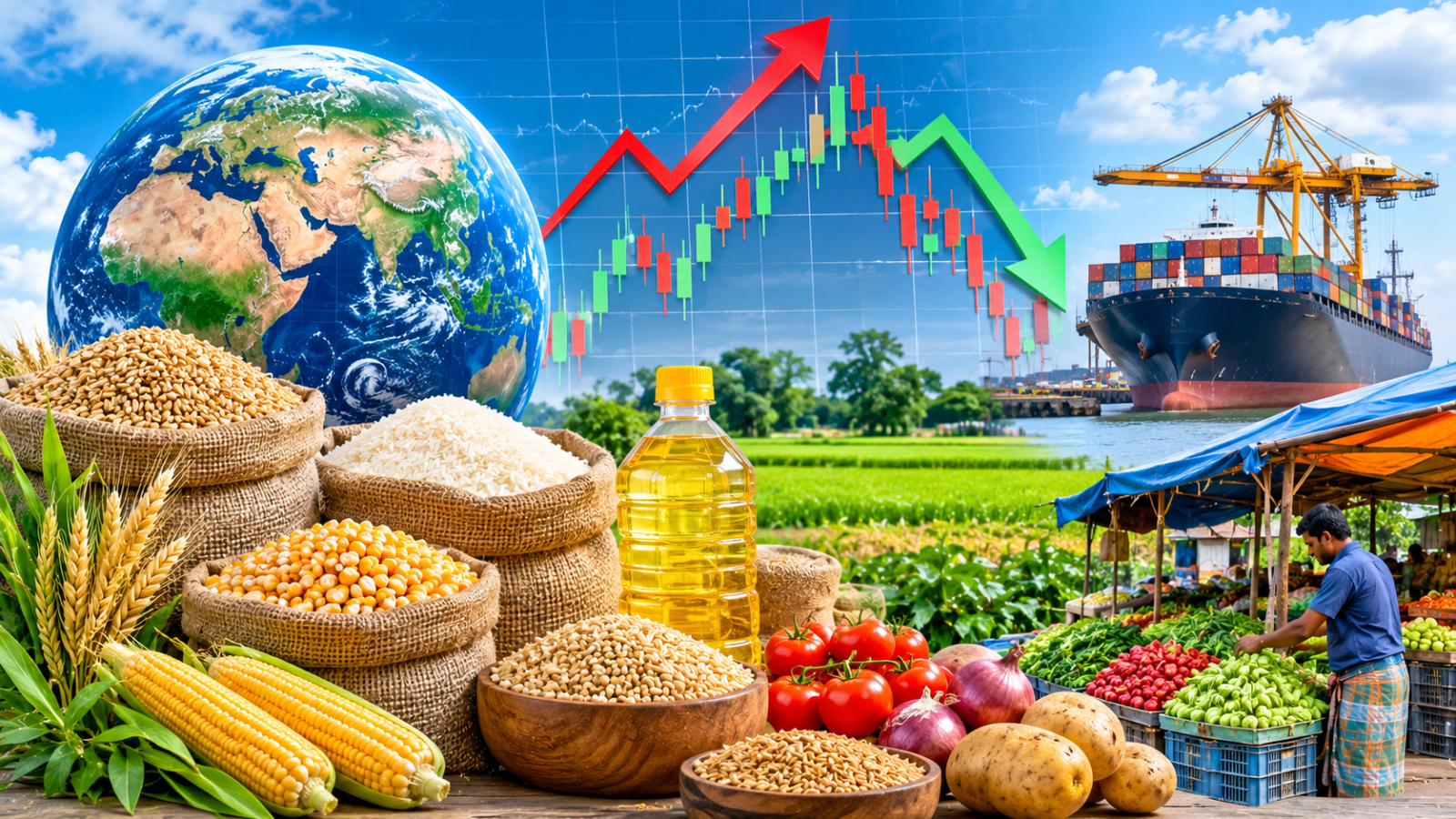
Bangladesh is largely self-sufficient in rice but imports much of its wheat, edible oil, sugar and lentils, so global price swings reach local markets after a while. What drives them?
- Weather and harvests: drought or floods in major producing countries cut supply and push prices up.
- Energy: fuel is needed for fertiliser, irrigation, transport and processing, and some crops become biofuel—so oil and food prices move together.
- Conflict and geopolitics: war disrupts production and shipping; export bans shrink supply.
- Freight and insurance costs add to import prices.
- Exchange rates: food is mostly traded in US dollars, so a weaker local currency raises import costs even when world prices are steady.
- Demand: population growth, rising incomes and stockpiling by big importers.
What import-dependent countries can do
- Boost and diversify domestic production.
- Maintain adequate public food stocks.
- Diversify import sources.
- Monitor markets transparently to deter hoarding.
- Keep food assistance for low-income households effective.
No single country controls world prices, but good planning can soften the shocks.