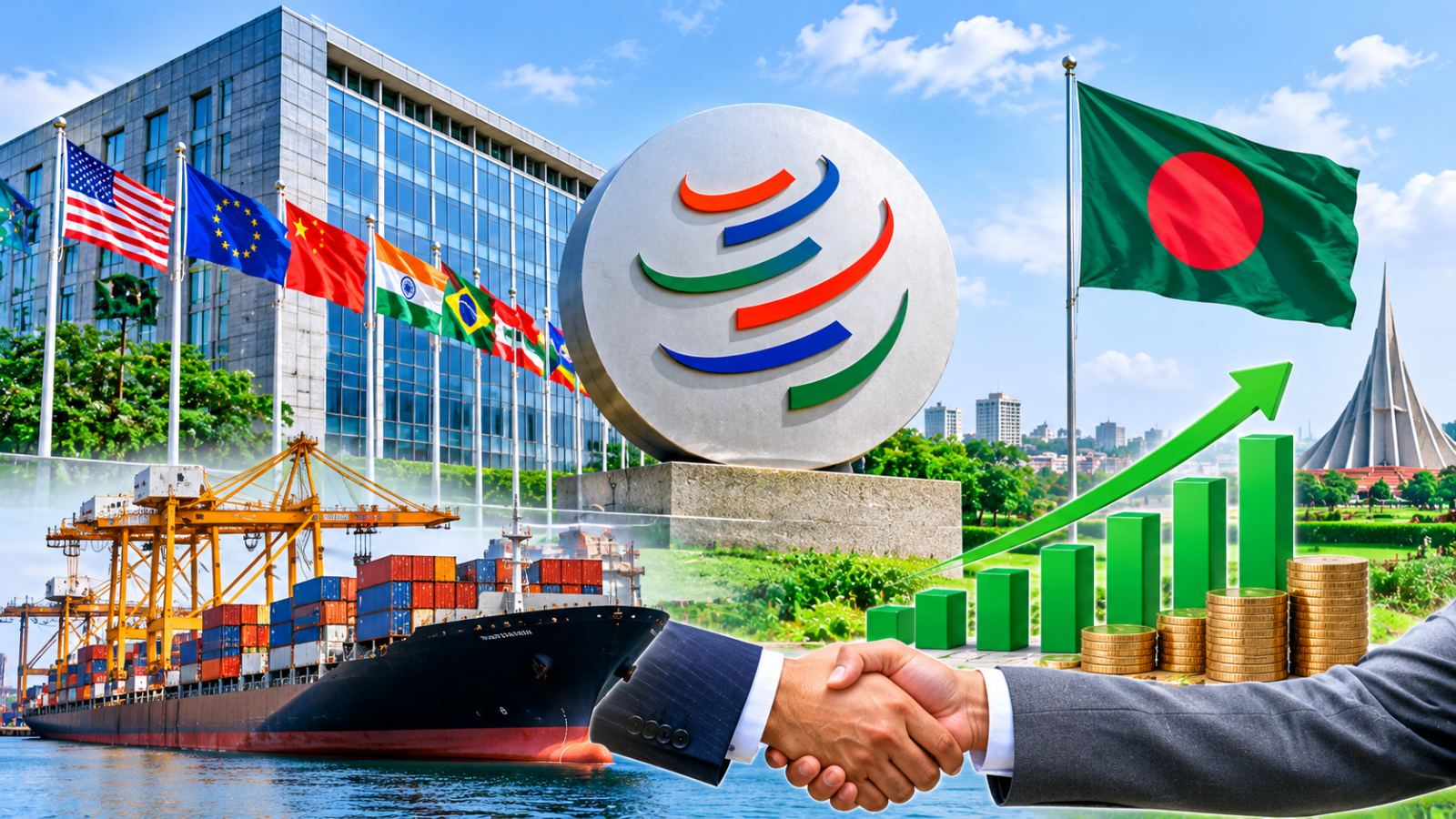
The World Trade Organization, founded in 1995 and based in Geneva, is the main global body for international trade rules. Most countries are members, including Bangladesh since the start.
What it does
- Makes rules through negotiated agreements on tariffs, farm subsidies, services and intellectual property.
- Settles disputes when one member believes another has broken the rules.
- Reviews trade policies for transparency.
- Builds capacity through training and technical help for developing countries.
Core principles
Non-discrimination—most-favoured-nation treatment and national treatment—plus predictability, transparency and gradual liberalisation.
Why it matters for developing countries
- Special and differential treatment gives them more time and some flexibility.
- Small economies can bring legal cases against large ones.
- Countries with shared interests can negotiate as groups.
Challenges
Consensus decision-making leaves talks stalled for years, interests diverge on agriculture, fisheries subsidies and digital trade, and the dispute system’s effectiveness has been questioned. For export-driven economies, rules-based trade and active participation in negotiations remain vital.