Bangladesh has become one of the world’s largest garment exporters, creating millions of jobs, especially for women. But relying on one sector for most export income is risky if demand falls or competition rises.
Why diversify
- Reduce dependence on one sector and a few markets.
- Adapt to changes in trade preferences.
- Move into higher-value products.
- Spread jobs across regions.
Promising sectors
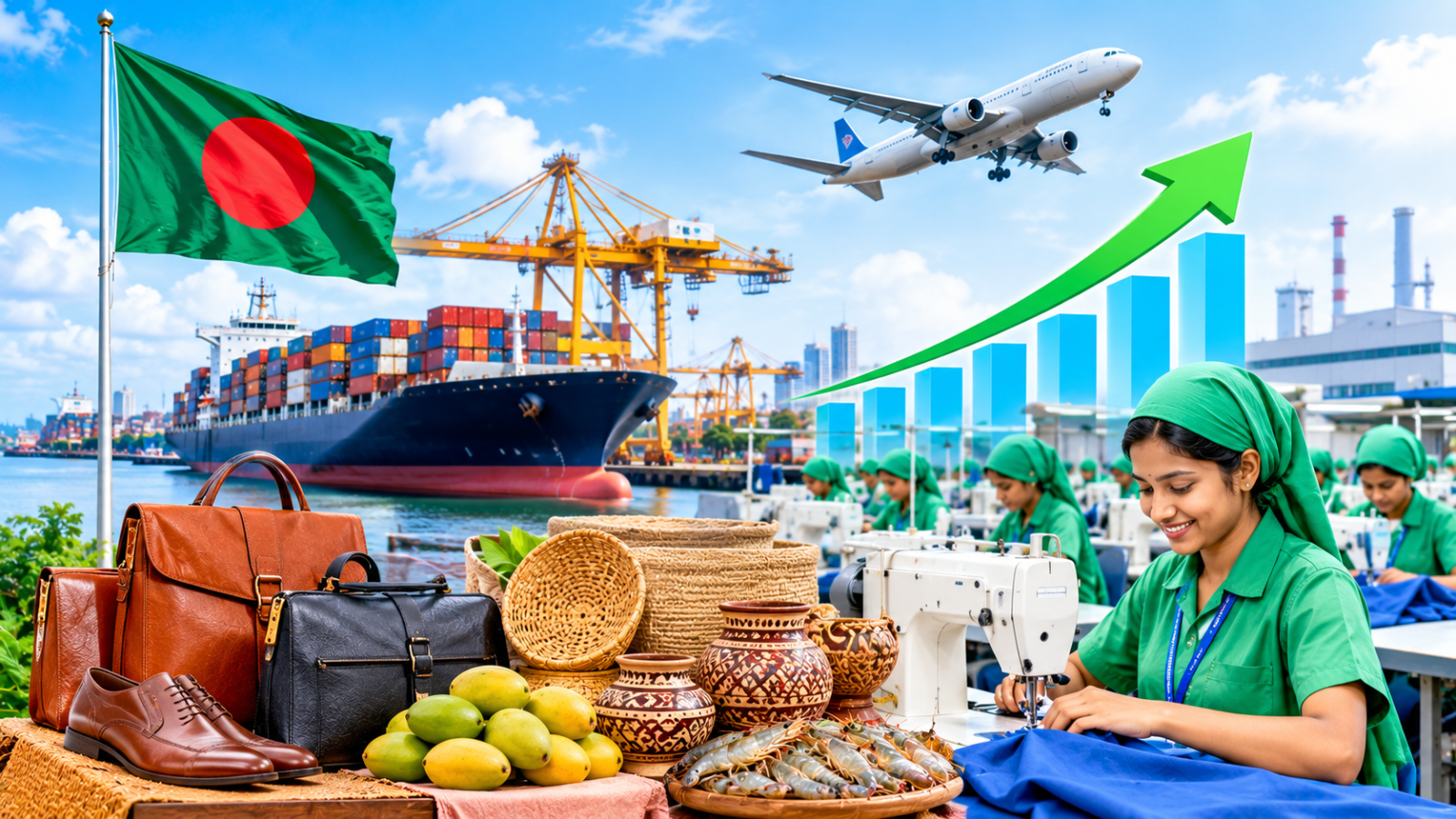
- Leather goods: local raw material; needs greener processing and international certification.
- Jute products: growing demand for eco-friendly alternatives to plastic.
- Pharmaceuticals: already exported to many countries; quality certification and research can take it further.
- Agro-processing: processed foods, spices, fruit and vegetables for diaspora and foreign buyers, with food-safety standards and modern packaging.
- Frozen fish and shrimp, with stronger quality control and traceability.
- ICT services: software, IT services and freelancing.
- Light engineering: bicycles, electrical goods, plastics and shipbuilding.
Progress on ports and infrastructure, energy supply, skills, financing, certification and new markets is essential, along with the kind of coordinated policy support the garment sector enjoyed.