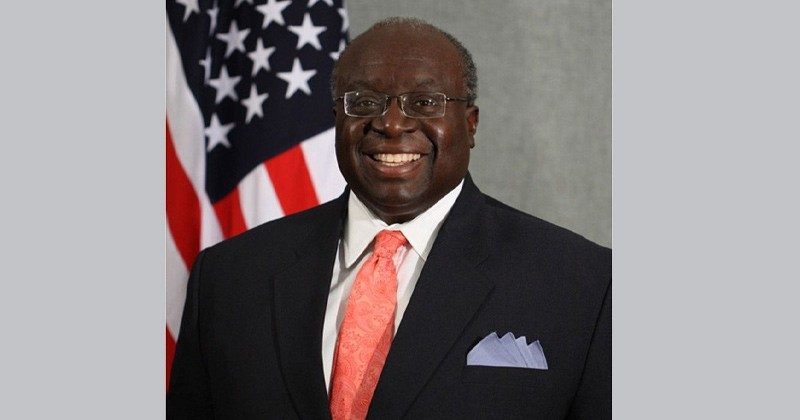
About 1,400 people lost their lives in the July-August 2024 student-mass movement in Bangladesh. Harry K Thomas, the former US ambassador to Bangladesh, spoke about the role of the security forces in this movement, including the deaths of Abu Saeed of Rangpur and a six-year-old child in Narayanganj.
Organized by Awami League in New York, 'Dhaka Ko Pathe! He said these things while addressing a seminar titled 'Bangladesh Today and Tomorrow' as the main discussant. In his speech, various aspects of Bangladesh's political changes, future of democracy, human rights, economic crisis and international relations came up.
Referring to the death toll in the July movement, Harry Thomas said, according to the calculations of the Office of the United Nations High Commissioner for Human Rights, the number of people killed in the movement in 2024 could be up to 1,400. He mentioned that a significant part of the victims lost their lives in the firing of the security forces. He also highlighted the fact that 44 policemen and eight other members of the security forces were killed in the violence that took place at the same time.
Urging the death toll not to be considered mere statistics, the former US diplomat said behind every death there is a family, a personal life and an irreparable loss.
In this context, he mentioned the death of Rangpur student Abu Saeed. According to his statement, Abu Saeed was shot dead while standing in front of the police with both hands outstretched. Similarly, he also highlighted the death of a six-year-old child while watching the clash from the roof in Narayanganj.
The role of government and opposition is important in democracy
Speaking about the political future of Bangladesh, Harry Thomas said that it is not possible to impose a democratic system on a country from outside. Democracy has to be established through people's own decision and participation.
He said that in a functioning democratic system it is essential to have an elected government as well as a strong opposition party. The role of the opposition is to monitor the functioning of the government, raise questions and play a role in ensuring accountability.
Referring to the recent political changes in the country, he mentioned the electoral success of BNP under the leadership of Tariq Rahman. He mentioned in his speech that after 17 years of exile, BNP has achieved two-thirds majority after returning to the country under his leadership. The former ambassador urged to give importance to the issue of peaceful transfer of power through polls even though there are differences of opinion on the results of the elections.
A call to bridge political divides
Harry Thomas identified the long-standing division and mutual mistrust as major obstacles in Bangladesh politics. According to him, apart from the political distance between BNP and the currently banned Awami League, there is disagreement with other political parties including Jamaat-e-Islami.
Apart from this, he commented that there is a gap in expectations and positions between the bureaucracy that has been dominant in the state administration for a long time and the younger generation who are looking for change.
He emphasized on taking collective initiatives for the future development of the country out of old political disputes, revenge and division.
Urge to ensure human rights and justice
The former US ambassador also expressed concern about the current human rights situation in Bangladesh. Citing Human Rights Watch observations, he said the arbitrary detention of people deemed to be dissidents and weak human rights protections risked continuing political repression.
He highlighted the need to follow a transparent, impartial and evidence-based judicial process to establish justice for those killed in the 2024 movement. According to him, justice cannot be done by detaining someone without proper complaint and legal process.
Challenges of economics and international relations
Analyzing the economic situation in Bangladesh, Harry Thomas points out inflation, poverty, weak banking sector and limited revenue collection as important challenges for the new government.
However, he sees the extension of Bangladesh's transition from the list of least developed countries to 2029 as a positive diplomatic achievement. He suggested utilizing this extra time for economic reforms, diversification of the export sector and increasing foreign investment.
Regarding US-Bangladesh relations, he said, the US cooperation from Bangladesh has not stopped. Humanitarian aid and health sector cooperation for the Rohingya population continues. Besides, potential investment by Trade Agreement and Development Finance Agency (DFC) can create new opportunities for Bangladesh economy.
Emphasis on balanced foreign policy
Harry Thomas highlighted the need to maintain a balanced relationship with various international partners without depending on a single country in the foreign policy of Bangladesh.
He thinks that Bangladesh should prioritize its own national interests and expand the field of cooperation with all countries.
At the end of the seminar, calling for unity among the political parties, he said that the mentality of seeing the victory of one side as the defeat of the other side in politics should be removed. All parties must find a way to work together for the long-term stability, democracy and development of the country.
In his speech at that seminar in New York, important discussions about the loss of lives of the July movement, the role of the security forces during the Awami League government and the political future of Bangladesh came up.